Pakistan’s Sialkot Made the FIFA World Cup 2026 Official Ball — The Trionda Story
FIFA World Cup 2026 | Published: June 12, 2026
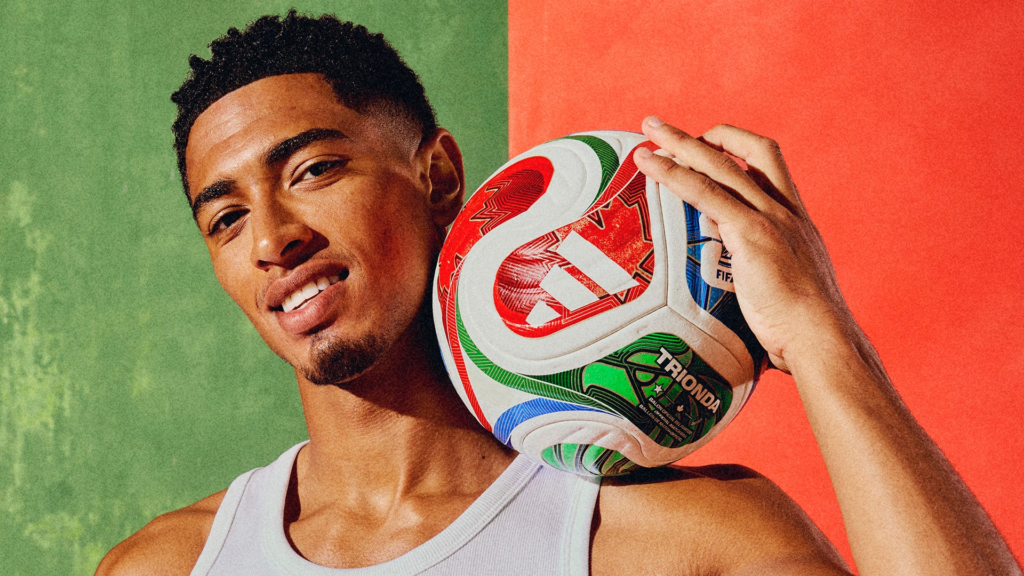
Pakistan is trending worldwide today — and it has nothing to do with cricket. As the FIFA World Cup 2026 kicked off on June 11, 2026 in North America, every single goal, every save, every moment of magic in this tournament will be created using a ball made in Pakistan. Specifically, made in Sialkot, Punjab — a city of approximately 800,000 people that has quietly become one of the most important sporting manufacturing hubs on the planet.
The Adidas Trionda — official match ball of the FIFA World Cup 2026 — was manufactured by Forward Sports, a Sialkot-based company that has now produced the official FIFA World Cup ball for four consecutive tournaments: 2014, 2018, 2022, and 2026. In a tournament watched by over five billion people worldwide, the ball at the center of every moment carries the craftsmanship of Pakistani hands.
This is the story of how Pakistan’s Sialkot became the football manufacturing capital of the world, what makes the Trionda revolutionary, and why this moment matters for Pakistan far beyond football.
What Is the Trionda? The FIFA World Cup 2026 Official Ball Explained
The Adidas Trionda is the official match ball of the FIFA World Cup 2026, co-hosted by the United States, Canada, and Mexico from June 11 to July 19, 2026.
The name carries layered meaning. Trionda comes from the Spanish words “Tri” meaning three and “Onda” meaning wave — representing both the three host nations and the flowing wave-inspired design featured on the ball. Its vibrant red, green, and blue panels pay tribute to each host nation, while gold detailing honours the FIFA World Cup trophy.
Key design features include host nation icons — the USA star, Canadian maple leaf, and Mexican eagle — appearing as bold graphics and embossed textures, plus a triangle motif where panel colours meet at the centre symbolising unity, a four-panel construction with deep seams for improved flight stability, and an enhanced textured surface for better grip in wet or humid conditions.
Adidas Football General Manager Sam Handy described it as: “the most visually playful FIFA World Cup ball we have ever created, a piece of craftsmanship built for the biggest stage.”
But the design is only half the story. What truly sets the Trionda apart from every previous World Cup ball is what is inside it.
The Technology Inside — AI, 500Hz Sensors, and Real-Time Data
The Trionda is not just a football. The 2026 World Cup ball is not just a ball anymore. Inside it is a sensor that tracks movement hundreds of times per second, helping AI systems judge offside calls, deflections, and game-changing moments.
One of the most significant technological advancements in the Trionda is its integrated 500Hz motion sensor chip. Match Day Trionda footballs carry the latest version of Adidas’ Connected Ball Technology, using a 500Hz inertial measurement unit motion sensor.
Unlike previous centre-mounted systems, Adidas says the chip now sits inside a specially created layer in one of the ball’s four panels, with counterbalances across the other three panels to help preserve flight stability. The system sends precise ball-movement data to the Video Assistant Referee in real time.
What this means in practice: when a player shoots for goal and the ball grazes a defender’s arm, the 500Hz sensor has already captured the exact point of contact, the ball’s speed, spin rate, trajectory, and direction of movement — all transmitted to VAR officials before the human eye has even registered what happened. Combined with player-position data and AI, that information can help officials make faster offside decisions and help identify individual touches of the ball, which could reduce the time spent reviewing incidents such as possible handballs.
For Pakistani fans watching on tapmad or PTV Sports — every VAR decision, every tight offside call, every controversial handball review in this World Cup will be resolved using data captured by a ball built in Sialkot.
Sialkot — The City That Makes the World’s Footballs
To understand why Forward Sports making the FIFA World Cup 2026 ball matters, you need to understand what Sialkot actually is.
Sialkot supplies more than two-thirds of the world’s footballs, with its skilled workers hand-stitching panels in local factories. For decades, the city has been at the heart of global football manufacturing, including the production of balls used in the sport’s biggest tournaments.
The numbers are staggering. Sialkot is known for producing nearly 70% of the world’s footballs and exporting over 43 million balls worth $191 million in 2021-22. Think about that for a moment. Every two footballs kicked on pitches, streets, and school grounds around the world — statistically, one of them came from Sialkot.
This did not happen by accident. Sialkot’s football manufacturing tradition stretches back over a century to the British colonial era, when local craftsmen first learned to stitch leather sports equipment for British officers. Over generations, the skills were refined, passed from father to son, workshop to workshop, until Sialkot became synonymous with football manufacturing quality that no other city in the world has replicated at scale.
Today, Sialkot’s football industry employs hundreds of thousands of people directly and indirectly — stitchers, panel cutters, quality control workers, logistics staff, and the supply chain that feeds them all. The FIFA World Cup ball contract is not just a sporting achievement. It is an economic lifeline for an entire region of Punjab.
Forward Sports — Pakistan’s World Cup Ball Manufacturer
The Trionda is manufactured by Forward Sports, a Pakistani manufacturing company in Sialkot, which also made the Al-Rihla, the official ball of the 2022 World Cup.
Forward Sports has manufactured official FIFA World Cup balls over the years 2014, 2018, 2022, and now 2026 — four consecutive tournaments. This is not a coincidence. Adidas, the world’s largest sporting goods manufacturer and FIFA’s official ball partner, keeps returning to Forward Sports because no other manufacturer in the world delivers the combination of precision craftsmanship, quality consistency, and production capacity that Sialkot provides.
The relationship between Adidas and Forward Sports spans nearly two decades. During each World Cup cycle, Adidas tasks Forward Sports with producing millions of balls — training balls, replica balls, and the elite match-day Trionda used in every tournament game. The manufacturing process involves multiple stages of panel cutting, hand-stitching by skilled artisans, quality testing, sensor installation, and final inspection — each stage demanding precision that mass production elsewhere cannot replicate.
Now, a Pakistani company in Sialkot is once again stepping up, producing the cutting-edge Adidas Trionda for the highly anticipated 2026 tournament, solidifying its indispensable role in global football.
What Does This Mean for Pakistan — Beyond Football
Pakistan has not qualified for the 2026 FIFA World Cup, yet it is trending worldwide as fans gear up for the opening ceremony of the football mega event — and the reason is Sialkot.
This reality captures something important about Pakistan’s relationship with football. Despite Pakistan never having qualified for a FIFA World Cup, the country has played a behind-the-scenes role in the tournament for decades through Sialkot’s football manufacturing industry.
But the significance of the Trionda moment extends beyond manufacturing contracts and export figures.
Global visibility: As the football fever grips the world, Pakistan’s Sialkot has set leading media houses and social media space on fire. International outlets from BBC to Al Jazeera to Khaleej Times are covering the Pakistan-Sialkot angle. For a country that struggles to generate positive global headlines, this is invaluable soft power.
Economic impact: The FIFA World Cup 2026 ball contract generates direct foreign exchange earnings for Pakistan at a time when the country needs every dollar of export revenue. The ripple effects through Sialkot’s supply chain — raw materials, transport, retail — multiply the economic impact significantly.
National pride: Pakistan’s involvement in that ecosystem, whether through football manufacturing, fandom, or participation, carries long-term diplomatic and economic value. When Lionel Messi scores a goal in this World Cup, when Kylian Mbappé runs past defenders, when the tournament’s defining moments are written — they will all be created with a ball that Pakistani workers crafted with their hands.
Pakistan’s Football Future — From Manufacturing to Playing
The Trionda story also raises a question that Pakistani football fans dare to ask: when will Pakistan play in a World Cup, not just make the ball for it?
Pakistan created history by winning their first round match in a FIFA World Cup qualifying tie by beating Cambodia in the first round, thus moving into the second round of the 2026 FIFA World Cup qualifiers — for the very first time since their participation in qualifier tournaments from 1990 onwards.
That milestone — Pakistan’s first World Cup qualifying round win — is modest against the scale of the world’s biggest football nations. But it signals momentum. The excitement surrounding FIFA World Cup 2026 within Pakistan reflects a younger generation increasingly connected to global football culture through digital media, European leagues, gaming, streaming platforms, and social media.
Today’s Pakistani football fan watches Premier League matches, follows La Liga standings, and wears replica kits of clubs from England, Spain, and Germany. The infrastructure and governance challenges that have historically held Pakistani football back are real — but the passion exists at a scale that, properly organized, could eventually produce a national team worthy of the stage that Sialkot already occupies.
How to Watch FIFA World Cup 2026 in Pakistan
Tapmad holds the exclusive digital and television broadcasting rights for the FIFA World Cup 2026 in Pakistan. Every match is a licensed HD stream. PTV Sports handles the television broadcast. There is no need for VPNs or third-party streams.
The 2026 FIFA World Cup features 104 matches over 39 days across 16 venues. The group stage runs from June 11 to June 27, the knockout rounds from June 28 through July 18, and the final is on July 19 at MetLife Stadium in New Jersey.
Defending champions Argentina enter the competition with high expectations as they aim to retain their crown, while global giants such as Brazil, France, England, Spain, and Germany are also strong contenders for the trophy.
For Pakistani fans, the schedule means many matches kick off late at night in Pakistan Standard Time (UTC+5) — but the opportunity to watch a World Cup ball made in Sialkot grace the world’s biggest football stage is worth staying up for.
The Trionda’s Legacy — Pakistan at the Heart of the World’s Game
When the FIFA World Cup 2026 final is played at MetLife Stadium in New Jersey on July 19, 2026, the ball at the center of that historic moment will carry Forward Sports’ quality and Sialkot’s craftsmanship. Five billion people around the world will watch, and somewhere in that ball’s journey from a factory floor in Punjab to the World Cup final, is a story about Pakistan that deserves to be told.
Pakistan may not have a seat at the tournament as players. But in the most literal sense possible, Pakistan is at the center of every single match in the FIFA World Cup 2026. That is something no other country in the world can say.
The Trionda is not just an official match ball. It is Pakistan’s quiet, powerful statement to the world: we are here, we have always been here, and the world’s beautiful game literally could not happen without us.
Published: June 12, 2026 | Sources: Ummid.com, Brandsynario, Gulf News, Khaleej Times, Minute Mirror Pakistan, FootballPakistan.com
You Might Also Like:
- Samsung Galaxy A36 5G Price in Pakistan 2026 — Full Specs & Review
- iPhone 17 Pro Max Price in Pakistan 2026 — Full Review
- Vivo V50 Price in Pakistan 2026 — ZEISS Camera & 90W Charging
- OnePlus 13s Price in Pakistan 2026 — Snapdragon 8 Elite Review
- Sparx Neo 7 Ultra Price in Pakistan 2026 — Best Under Rs. 25,000

I had some trouble accessing my account before, but this login page is super fast and reliable. Great service, just use khela888login to get started quickly.
I’ve been trying a few platforms lately and this one really stands out. The interface is super smooth and the payouts are fast. Definitely recommend checking out caricuan99 if you want a reliable spot.
Really impressed with the customer support here. They answered my questions in minutes. Great service and great games at phjili368.
The VIP treatment here is legit. I feel like a valued player every time I log in. If you want a premium experience, pera789viplogin is the way to go.
The best part about this site is how user friendly it is. Even a beginner can navigate it easily. I’m spending a lot of time on pk98pak lately.