Sweden vs Tunisia – FIFA World Cup 2026: Match Report, Lineups, H2H & Group F Standings
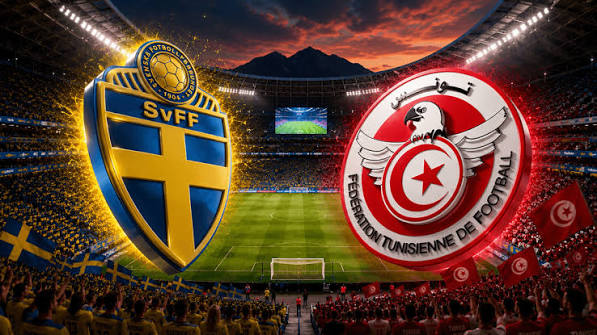
Quick Match Facts
| Detail | Info |
|---|---|
| Competition | FIFA World Cup 2026 – Group F, Matchday 1 |
| Date | June 15, 2026 (Monday) |
| Venue | Estadio BBVA (Estadio Monterrey), Guadalupe, Mexico |
| Kickoff | 02:00 UTC / 10:00 PM ET (June 14) |
| Sweden Manager | Graham Potter |
| Tunisia Manager | Sabri Lamouchi |
| TV/Stream | FS1 (USA), BBC/ITV (UK) |
Introduction
The 2026 FIFA World Cup arrived at Estadio BBVA in Monterrey for what promised to be one of the more intriguing Group F clashes of the opening matchday. Sweden and Tunisia – two nations with very different paths to this tournament – met in a game where three points would carry enormous weight. Earlier the same day, the Netherlands and Japan had shared the spoils in a breathless 2–2 draw, which meant that a win here would hand either Sweden or Tunisia a significant early advantage in the race for the knockout stages.
Sweden came in under the steady guidance of former Chelsea and Brighton manager Graham Potter, who has revived a squad that embarrassingly failed to win a single match in UEFA World Cup qualifying. Tunisia, coached by Sabri Lamouchi, arrived carrying the hopes of a nation that has never progressed beyond the group stage across six previous World Cup appearances. For the Eagles of Carthage, this was not merely a football match – it was an opportunity to rewrite history.
Sweden’s Road to World Cup 2026
Sweden’s path to this tournament was, to put it politely, unconventional. The Blågult finished rock-bottom of their UEFA qualifying group, failing to secure a single victory across the campaign. What saved them was the UEFA Nations League – a competition that offered a lifeline playoff route, and Sweden took full advantage. Under Potter’s tactical overhaul, they defeated Ukraine and Poland in consecutive playoff ties to book their 13th World Cup appearance.
The attacking firepower at Potter’s disposal is genuinely world-class. Viktor Gyökeres – who has been in extraordinary form for Arsenal – and Alexander Isak of Newcastle United form one of the most dangerous striking partnerships Sweden has ever assembled. Yet consistency has been elusive. Sweden failed to beat Norway or Greece in their warm-up friendlies and have conceded in eleven consecutive fixtures heading into this tournament. Defensively, there are questions that Tunisia were expected to probe.
Tunisia’s Road to World Cup 2026
If Sweden’s qualifying campaign was chaotic, Tunisia’s was a masterclass of dominance. Drawn in a CAF group alongside Namibia, Liberia, Malawi, Equatorial Guinea, and São Tomé & Príncipe, the Eagles of Carthage were relentless. They won nine of their ten qualifying matches, finished thirteen points clear at the top of their group, and – most impressively – did not concede a single goal throughout the entire qualifying campaign.
This is Tunisia’s seventh World Cup appearance and third in a row. Lamouchi’s side is built on the creative instincts of Hannibal Mejbri, the Burnley midfielder who is the heartbeat of Tunisian football, alongside experienced campaigner Ellyes Skhiri anchoring the midfield. However, their pre-tournament form offered reasons for concern. Tunisia failed to score in their last three matches heading into this game, and their final preparation match ended in a humiliating 5–0 loss to Belgium – a result that raised serious questions about their readiness.
Starting Lineups
Sweden (3-4-1-2)
Kristoffer Nordfeldt; Gustaf Lagerbielke, Isak Hien, Victor Nilsson Lindelöf; Alexander Bernhardsson, Jesper Karlström, Yasin Ayari, Gabriel Gudmundsson; Benjamin Nygren; Alexander Isak, Viktor Gyökeres
Tunisia (4-3-3 / 4-2-3-1)
Mouhib Chamakh; Yan Valery, Montassar Talbi, Omar Rekik, Ali Abdi; Ellyes Skhiri (c), Rani Khedira; Anis Ben Slimane, Hannibal Mejbri, Elias Saad
Match Report
First Half – Ayari Stuns with an Early Stunner
Sweden wasted no time imposing themselves on the match. Within the opening ten minutes, they produced a moment that will be discussed for years. Viktor Gyökeres surged forward and forced Tunisia goalkeeper Mouhib Chamakh into a scrambled save. The ball broke loose in the area, and rather than Isak or Gyökeres converting, it fell to Brighton midfielder Yasin Ayari – a player of Swedish-Tunisian heritage – who took one touch to control and unleashed a ferocious strike into the top corner from distance.
It was a sensational goal. Ayari, born in Sweden to Tunisian parents, notably did not celebrate – a moment of quiet dignity that was noticed by everyone inside Estadio BBVA. Sweden led 1-0, and for Ayari personally, it was an emotionally complex moment rendered perfect by football’s unique capacity for nuance.
Tunisia responded with characteristic defensive resolve. Mejbri began to pick up the ball in deeper areas and drive forward, while Skhiri worked tirelessly to break up Sweden’s rhythm in the press. Ben Slimane dragged the Eagles up the pitch on several occasions, laying off to Valery on the overlap, but Sweden’s backline – marshalled by a composed Lindelöf – held firm.
Gyökeres, for his part, was a constant threat throughout the first period. He cut inside from the left on multiple occasions, testing Chamakh from tight angles, though finishing was not at its sharpest. Isak found pockets of space in behind but was denied by tight covering from Talbi and Rekik.
Second Half – Sweden Hold Firm
The second half settled into a pattern familiar to anyone who watches Tunisia carefully. Lamouchi’s team defended with discipline and waited for moments to counter. Sweden, leading for the first time competitively in a very long time, appeared content to manage the game rather than push for a second.
Mejbri continued to be Tunisia’s most dangerous creative outlet, drawing a foul from Lagerbielke to earn a dangerous free-kick. His deliveries caused brief moments of anxiety in the Swedish box, but the Blågult held shape. Potter made tactical adjustments, bringing on fresh legs in the second half to maintain the press and reduce Tunisia’s opportunities to threaten on the counter.
As the clock ticked down, Sweden became increasingly pragmatic. They were happy to absorb pressure, shuttle the ball wide, and run down the clock. Tunisia created chances but could not convert, continuing a goalscoring drought that now stretches beyond four matches. Hannibal Mejbri – easily the best player in a white shirt all evening – could not find that final touch of quality to change the game.
Final Score: Sweden 1–0 Tunisia
Goalscorer: Yasin Ayari (approx. 9′)
Head-to-Head Record: Sweden vs Tunisia
This was the first-ever competitive match between the two nations. Their previous four meetings have all been friendly fixtures, and the historical record slightly favours Sweden.
| Date | Competition | Result |
|---|---|---|
| Pre-2026 | International Friendly | Tunisia 1–0 Sweden |
| Earlier | International Friendly | Sweden 0–0 Tunisia (Draw) |
| Earlier | International Friendly | Sweden win |
| Earlier | International Friendly | Sweden win |
Sweden lead the all-time head-to-head with 2 wins, 1 draw, and 1 defeat. No player has scored more than once across all four previous meetings, which made Ayari’s goal historically significant as the first-ever goal in a competitive encounter between these nations.
Group F Standings After Matchday 1
| Position | Team | P | W | D | L | GF | GA | GD | Pts |
|---|---|---|---|---|---|---|---|---|---|
| 1 | Sweden | 1 | 1 | 0 | 0 | 1 | 0 | +1 | 3 |
| 2 | Netherlands | 1 | 0 | 1 | 0 | 2 | 2 | 0 | 1 |
| 3 | Japan | 1 | 0 | 1 | 0 | 2 | 2 | 0 | 1 |
| 4 | Tunisia | 1 | 0 | 0 | 1 | 0 | 1 | -1 | 0 |
Sweden sit top of Group F following their opening-day victory. The Netherlands and Japan sit level on one point apiece after their entertaining 2–2 draw earlier on the same day. Tunisia must now regroup quickly ahead of their next fixtures.
Key Players
Yasin Ayari (Sweden)
The Brighton midfielder was the undisputed standout of the match. His goal – struck with power and precision from outside the box – was a contender for one of the goals of the tournament. Born to Tunisian parents, Ayari’s decision not to celebrate made this one of the most emotionally resonant moments of the 2026 World Cup so far. He was consistently involved in Sweden’s best moments, driving forward with intelligence and pressing from the front.
Viktor Gyökeres (Sweden)
The Arsenal striker was a constant physical presence and created significant danger throughout, but his finishing did not reach the heights his club form has set. He forced the save that led directly to Ayari’s goal – a key contribution that the statistics may not fully capture.
Hannibal Mejbri (Tunisia)
The Burnley midfielder was Tunisia’s best and most threatening player. He worked tirelessly in both phases of the game and showed flashes of the creativity that has made him one of Africa’s most exciting midfielders. The final product, however, was missing – a reflection of Tunisia’s broader attacking struggles heading into this tournament.
Sweden’s Path to World Cup 2026 – A Unique Story
It would be wrong to discuss this match without acknowledging what makes Sweden’s presence here so unusual. Graham Potter’s side became the first team in history to reach a World Cup via the UEFA Nations League playoff route after finishing bottom of their qualifying group. The pathway – through back-to-back wins over Ukraine and Poland in the playoffs – showed a squad capable of performing under pressure, even if consistent form has eluded them.
Potter has instilled a possession-based, progressive style that relies heavily on the front two. When Gyökeres and Isak function as a unit, Sweden are genuinely dangerous. Against Tunisia, that danger translated into one goal – enough to secure three precious points that instantly change the complexion of their group campaign.
Tunisia’s Seventh World Cup – Still Chasing History
Tunisia have participated in the FIFA World Cup seven times. They remain the only African nation yet to progress beyond the group stage. Their qualifying campaign this time around was almost perfect – nine wins from ten, a defensive record that saw them concede zero goals – yet the jump from CAF qualifying to the World Cup stage has historically exposed the Eagles of Carthage.
Their pre-tournament loss to Belgium (5–0) and a run of games without scoring has raised genuine concerns. Lamouchi’s focus on tactical organization is clear, but without goals, Tunisia cannot realistically advance from a group that includes the Netherlands and Sweden.
What’s Next for Both Teams?
Sweden will next face either the Netherlands or Japan in Matchday 2 of Group F. Three points from the opener puts them in an excellent position. A positive result in the next fixture could see them qualify for the Round of 32 before the final group game.
Tunisia face an uphill task. They must win their remaining group games to have any realistic chance of progressing. Their upcoming opponents – a rested Netherlands or Japan – will offer little room for the defensive errors that better teams will exploit if their attack remains muted.
Frequently Asked Questions (FAQ)
Q: What was the result of Sweden vs Tunisia at the 2026 World Cup?
A: Sweden defeated Tunisia 1–0 in their FIFA World Cup 2026 Group F opener at Estadio BBVA, Monterrey. Yasin Ayari scored the only goal in the first half.
Q: Who scored for Sweden against Tunisia?
A: Yasin Ayari, the Brighton midfielder of Swedish-Tunisian heritage, scored a long-range strike in the early minutes of the match.
Q: Where was Sweden vs Tunisia played?
A: The match was played at Estadio BBVA (also known as Estadio Monterrey) in Guadalupe, Mexico, a stadium with a capacity of approximately 51,000.
Q: What group are Sweden and Tunisia in at the 2026 World Cup?
A: Both nations are in Group F alongside the Netherlands and Japan.
Q: Has Tunisia ever qualified from the World Cup group stage?
A: No. Despite seven World Cup appearances, Tunisia have never advanced beyond the group stage, making it their primary goal at every tournament.
Q: What is the head-to-head record between Sweden and Tunisia?
A: Prior to this 2026 World Cup meeting, Sweden led the all-time head-to-head 2–1 with one draw from four friendly encounters. This 2026 match was the first-ever competitive fixture between the two nations.
Q: Who is Sweden’s manager at the 2026 World Cup?
A: Graham Potter, the former Chelsea and Brighton manager, took charge of Sweden and led them to the 2026 World Cup via the UEFA Nations League playoff route.
Q: Who is Tunisia’s key player?
A: Hannibal Mejbri, the Burnley midfielder, is widely regarded as Tunisia’s most creative and influential player at this tournament.
Sources
- Sports Mole – Sweden vs Tunisia H2H Record and Past Meetings
- ESPN – Sweden vs Tunisia Live World Cup 2026
- Bleacher Report – Sweden vs Tunisia Live World Cup 2026 Updates, Scores and Highlights
- Sports Illustrated – Sweden vs Tunisia World Cup: Live Score and Match Stats
- WhoScored – Sweden vs Tunisia FIFA World Cup 2026 Statistical Preview
- Sofascore – Sweden vs Tunisia Live Score and H2H





Finally found a platform that actually feels lucky. The bonuses are generous and the customer support is surprisingly quick. Give pklucky81 a try.
Just wanted to drop a quick note to say how much I appreciate this platform. Playing here feels like hanging out with buddies who actually pay out on time. The app runs smooth on my phone and I never have to wait around for answers. Really appreciate the honest approach to gaming and the warm community feel. Keep up the great work. br724bet
Finally found a login link that actually works without any glitches. The experience here is top notch. Just check out ph1xbetlogin for the best action.
If you are looking for the best collection of Jili games, this is the spot. Everything loads fast and the wins feel rewarding. Big thanks to jiliigames.
I’ve been playing here for a few weeks now and the payouts are surprisingly fast. Really smooth experience so far! phjilif